Can Cats Eat Cheese? A Dairy Dilemma for Felines
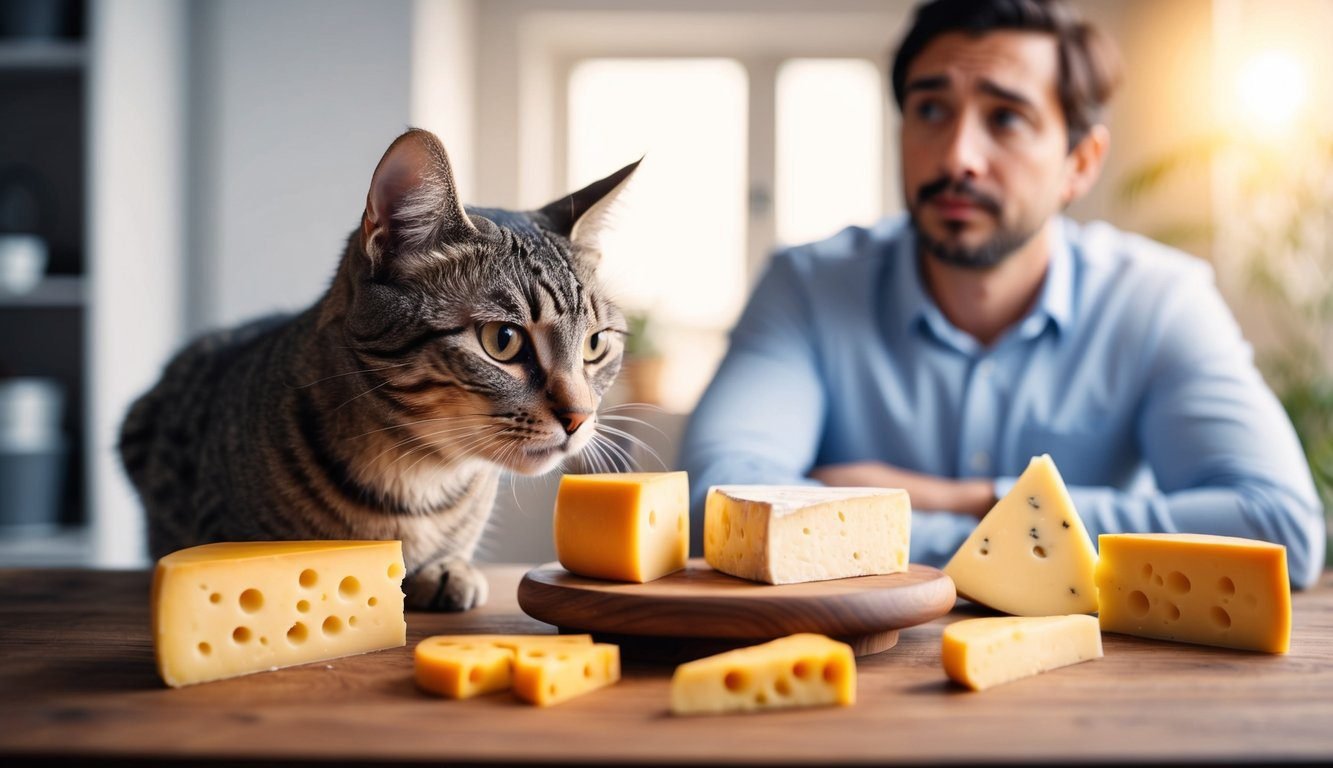
Ever caught your feline friend eyeing up your cheese platter? You might wonder if it’s safe to share a nibble with your furry mate. While cats can eat small amounts of cheese as a rare treat, it’s not recommended as a regular part of their diet.
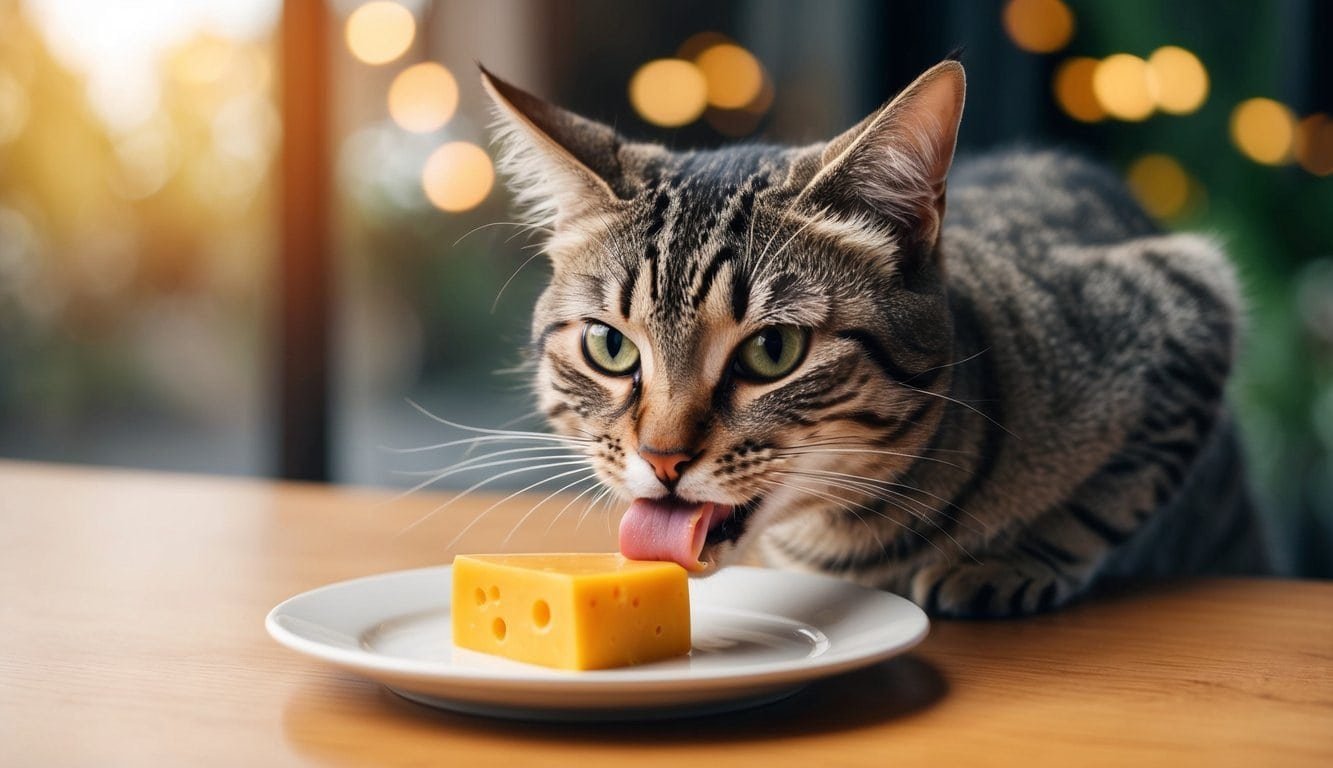
Cats and dairy have a complicated relationship. Most adult cats are lactose intolerant, which means their tummies can’t handle milk products well. Cheese might give your kitty a case of the runs or a belly ache. Plus, it’s high in fat and salt, which isn’t great for your cat’s waistline or heart health.
But don’t worry, you’re not a bad pet parent if your cat’s pinched a bit of cheddar off your sandwich. A tiny taste now and then won’t hurt most cats. Just keep an eye out for any tummy troubles afterwards. If you want to treat your cat, there are plenty of other yummy and safe options that’ll have them purring with delight.
Debunking the Myth: Can Cats Eat Cheese?
You might think your feline friend would love a nibble of cheese, but the truth is a bit more complicated. Let’s unravel this cheesy mystery and see what’s really going on with cats and their dairy desires.
What’s the Deal with Cats and Cheese?
Ever caught your kitty eyeing off your cheese platter? It’s true, cats can eat small amounts of certain cheeses, but it’s not the ideal snack for your furry mate. While they might seem keen, most cats don’t have the digestive system to handle dairy properly.
If you’re thinking of sharing a bit of cheddar with your cat, keep it tiny. A cube the size of a die is more than enough. But remember, cheese is high in fat and salt, which isn’t great for your cat’s waistline or heart health.
Some cats might even turn their nose up at cheese altogether. After all, mice don’t exactly come with a side of brie in the wild!
The Truth About Lactose Intolerance in Cats
Here’s a shocker: most adult cats are lactose intolerant. That’s right, your milk-loving moggy might actually have a hard time digesting dairy products. As kittens, cats have the enzyme to break down their mum’s milk, but they often lose this ability as they grow up.
What happens if your lactose intolerant cat munches on cheese? It’s not pretty:
- Upset tummy
- Vomiting
- Diarrhoea
- Gas (and trust us, cat farts are no laughing matter)
If you’re dead-set on giving your cat a cheesy treat, opt for hard, aged cheeses like cheddar or Swiss. These have less lactose and might be easier on your cat’s tummy. But remember, even then, moderation is key!
A Cheesy Situation: Understanding Dairy Allergies in Cats
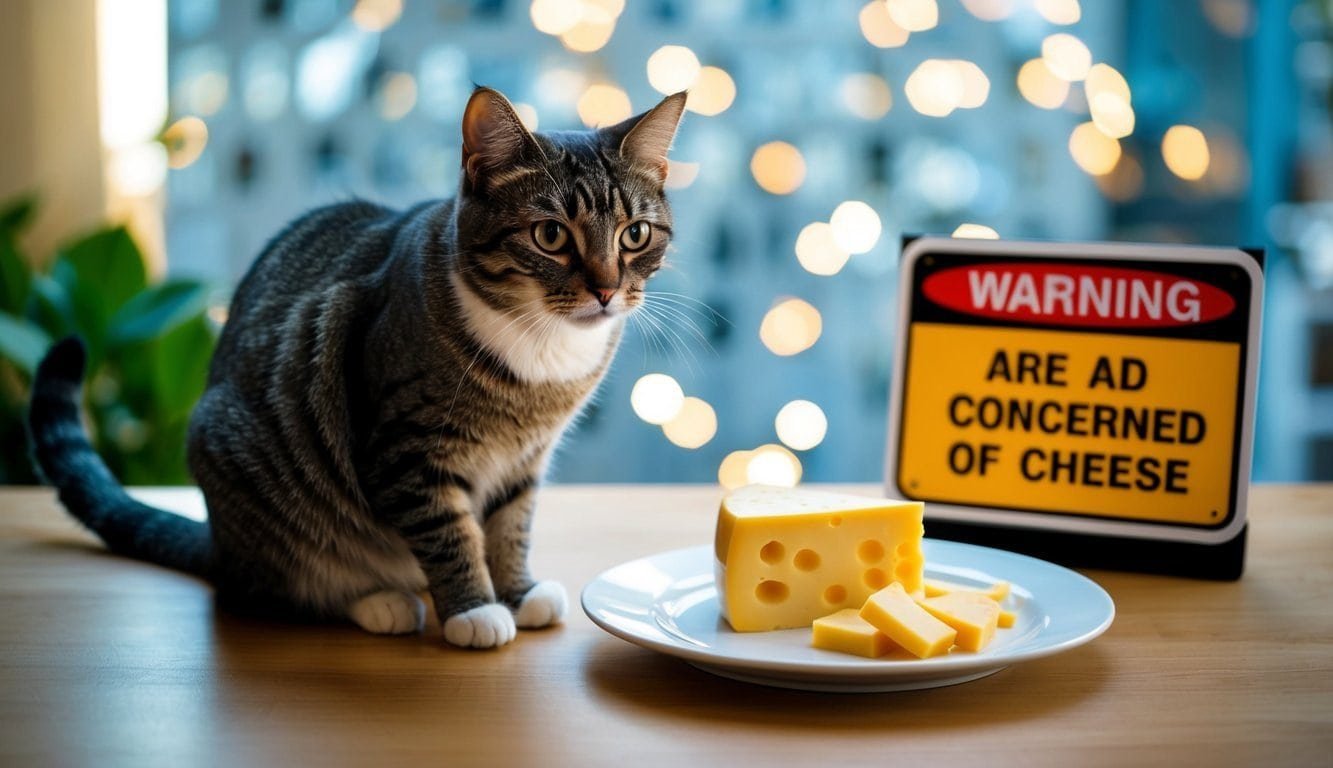
Many cats love cheese, but their tummies might not agree. Let’s dive into the world of feline dairy allergies and see why your furry friend might need to steer clear of that cheddar.
Signs Your Cat Might Be Dairy Allergic
Is your kitty acting a bit off after sneaking a bite of your cheese platter? Here are some telltale signs of a dairy allergy in cats:
- Tummy troubles: Watch out for vomiting or diarrhoea
- Itchy skin: Excessive scratching or grooming
- Sneezing fits: Yes, even cats can get the sniffles!
- Watery eyes: More tears than usual? Might be the cheese!
If you spot these symptoms, it’s time to play detective. Keep a food diary for your feline friend and see if dairy’s the culprit.
Dairy vs. Dairy-Free: A Cat’s Perspective
You might think your cat’s living the dream with a saucer of milk, but their body disagrees. Most adult cats are lactose intolerant, meaning they can’t digest milk sugar properly.
So, what’s a cat to do? Luckily, there are plenty of dairy-free options:
- Lactose-free cat milk (yes, it’s a thing!)
- Small amounts of plain, cooked chicken or fish
- Cat-safe fruits and veggies (in moderation)
Remember, your cat’s not missing out by skipping the cheese. They’re actually living their best, tummy-ache-free life!
The Gouda, the Brie, and the Ugly: Types of Cheese and Cat Health
Cheese lovers, listen up! Your feline friend might be eyeing that cheese platter, but not all cheeses are created equal when it comes to cat health. Let’s explore which cheeses might be a tasty treat and which could leave your kitty feeling less than purr-fect.
Which Cheeses Are Less ‘Paw-blematic’?
If you’re keen to share a nibble with your furry mate, some cheeses are less likely to cause a cat-astrophe. Hard cheeses like Gouda and cheddar have less lactose, making them easier for your kitty to digest. But remember, even these should be given in tiny amounts, no bigger than a dice.
Got a pill to hide? A smidge of cheese might do the trick. Just don’t make it a habit, alright? Your cat’s tummy will thank you. And if you’re feeling fancy, a tiny bit of goat cheese might be okay too, but go easy on it.
Cheeses That Could Turn Snack Time into Hack Time
Now, let’s talk about the cheeses that could have your cat coughing up hairballs faster than you can say “lactose intolerance”. Soft cheeses are a big no-no. That means no Brie for your bestie! These creamy culprits are packed with lactose and could give your cat a case of the runs.
Other cheeses to avoid include:
- Cottage cheese
- Cream cheese
- Mozzarella
- Blue cheese
- Camembert
These cheeses are more likely to upset your cat’s tummy and lead to a messy litter box situation. Trust us, you don’t want to deal with that! So next time you’re enjoying a cheese board, keep it to yourself and offer your kitty a cat-approved treat instead.
Feline Fine: Safe Snacking Alternatives
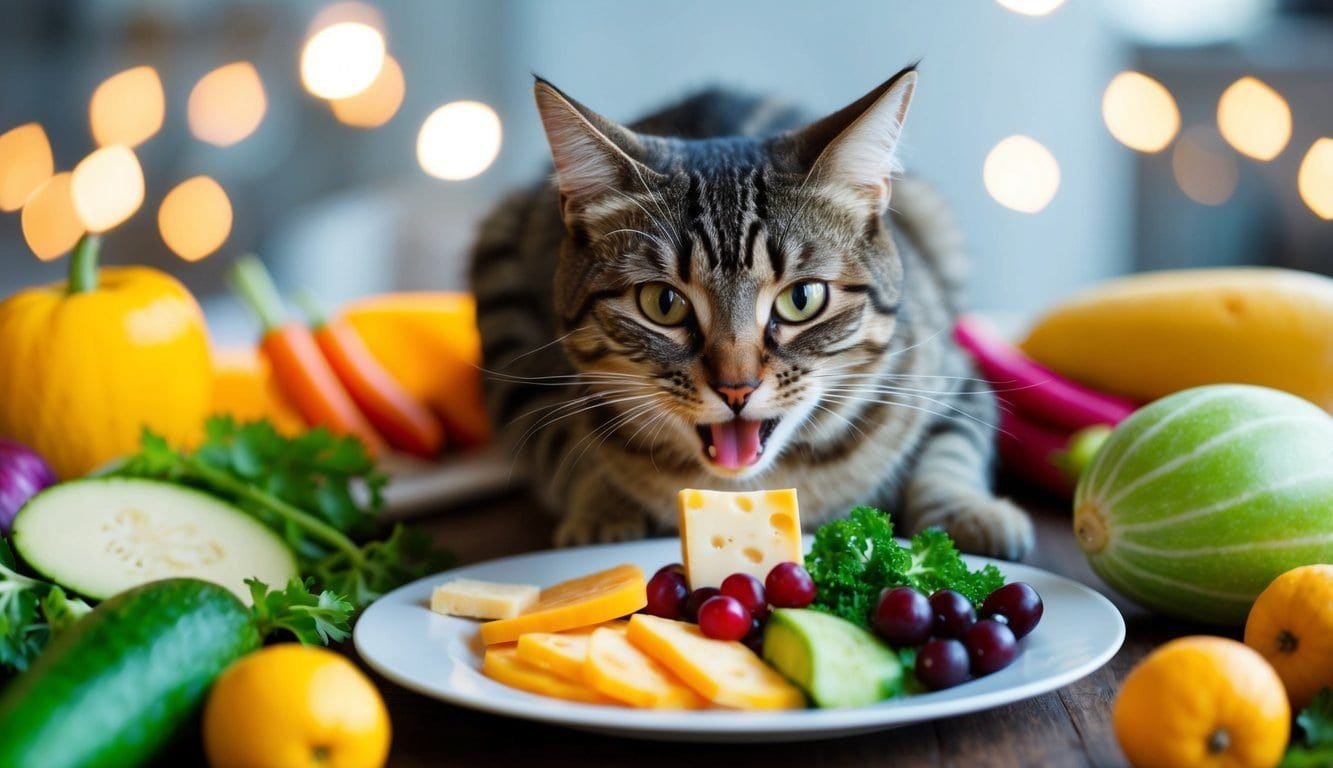
Your kitty might fancy a nibble of cheese, but there are heaps of better options to keep them happy and healthy. Let’s explore some yummy treats that’ll make your cat’s whiskers twitch with delight!
Cat-Safe Treats to Purr Over
Crikey, there’s a world of cat-safe treats out there! You can treat your furry mate to small bits of cooked chicken or fish – they’ll go bonkers for it. Fancy a bit of greenery? Some cats love a munch on cat grass or catnip.
For a crunchy snack, try freeze-dried meats – they’re easier on your cat’s tummy than cheese. And if you’re feeling generous, commercial cat treats are always a winner. Just remember to keep it to a dinkum 10% of their daily tucker.
Want to get creative? Whip up some homemade cat treats using tuna or chicken. Your cat will think you’re the bee’s knees!
Creating a Meow-thwatering Menu for Your Cat
Ready to become a master chef for your feline friend? It’s time to put together a ripper menu that’ll have your cat meowing for more!
Start with a base of high-quality cat food to keep your kitty in tip-top shape. Then, sprinkle in some variety with small servings of cooked egg or bits of plain, cooked meat.
For a bit of fun, freeze some low-sodium chicken broth in ice cube trays. It’s a cool treat for hot days! And don’t forget about cat-safe veggies like carrots or green beans – they’re bonza low-calorie options.
Remember to introduce new foods slowly, and always keep an eye on your cat’s reaction. With these tasty alternatives, your cat won’t even give cheese a second thought!
Cats and Cheese: A Culinary Conundrum
You might think your feline friend would love a cheesy treat, but the reality is a bit more complicated. Let’s explore the pros and cons of feeding cheese to your kitty.
When Cheese is on the Line: Should You or Shouldn’t You?
Cats can eat small amounts of certain cheeses, but it’s not the ideal snack for your furry mate. Most cats are lactose intolerant, which means their tummies might not appreciate that cheesy goodness as much as you’d think.
If you’re set on sharing a nibble, stick to low-lactose options like cheddar or Swiss. But remember, moderation is key! A tiny piece now and then won’t hurt, but don’t go overboard.
Keep in mind that cheese is high in fat and calories. Your cat doesn’t need the extra kilos, so it’s best to keep cheese as a rare treat. Always chat with your vet before introducing new foods to your cat’s diet.
From Cheese Lover to Cheese Skeptic: A Cat’s Journey
You might’ve seen your cat eyeing off your cheese platter, but that doesn’t mean it’s good for them. While cats might show interest in cheese, their bodies aren’t built to handle dairy well.
Most adult cats are lactose intolerant, which means they lack the enzyme needed to break down lactose in dairy products. This can lead to some unpleasant side effects like:
- Upset tummy
- Vomiting
- Diarrhoea
Your cat’s ancestors didn’t snack on cheese, and their digestive systems haven’t evolved to handle it. So, while your kitty might seem keen, it’s best to stick to cat-appropriate treats instead.
Frequently Asked Questions
+Oi, mate, what’s the go with cats munchin’ on a bit of the good ol’ cheddar?
Look, your furry friend might fancy a nibble of cheese, but it’s not exactly a nutritional jackpot for cats. Most cats are lactose intolerant, so cheese might give them a bit of a tummy ache. If you’re dead-set on sharing, stick to a tiny morsel, no bigger than a dice. Your cat’s belly will thank you later!
+So, my furball’s nicked a cheesy snack; is it time for kitty rehab or what?
No need to call the cat cops just yet! If your cat’s pinched a bit of cheese, keep an eye on them for any funny business in the litter box. Most likely, they’ll be right as rain. But if they start chucking a wobbly, give your vet a bell.
+Fancy a giggle? Will the cat keel over if it scoffs down some fromage?
Nah, your cat won’t cark it from a bit of cheese. But too much of the good stuff can lead to some pretty unpleasant digestive issues. Think runny bum and a cranky kitty. Not exactly a barrel of laughs, is it?
+Suppose the moggie fancies a bit of brie; are we headed for a cheesy catastrophe?
Easy, tiger! A smidge of brie won’t send your cat to the emergency room. But remember, cheese is high in fat and calories. Your cat might pack on the kilos if they make a habit of it. A chubby tabby might be cute, but it’s not great for their health.
+Hear about the cat who loves its cheese more than a sunbake? Is that a whisker-lickin’ good time or a vet run waiting to happen?
Strewth, that’s one cheese-mad cat! While it might seem like a ripper of a treat, too much cheese can spell trouble. It’s low in protein and high in fat, which isn’t ideal for your feline friend. Best to keep the cheese party to a minimum.
+Is playing ‘Pass the Parmesan’ with my tabby a bad idea? How bad are we talking – skipping a meal or skipping nine lives?
Crikey, ‘Pass the Parmesan’ sounds like a hoot! But let’s not go overboard. A tiny taste won’t hurt, but making it a regular game might lead to an upset tummy or weight gain. Your cat won’t lose all nine lives, but they might lose their svelte figure. Stick to cat-friendly games instead, yeah?