Can Cats Eat Tuna? A Cat’s Honest Guide to the Good Stuff
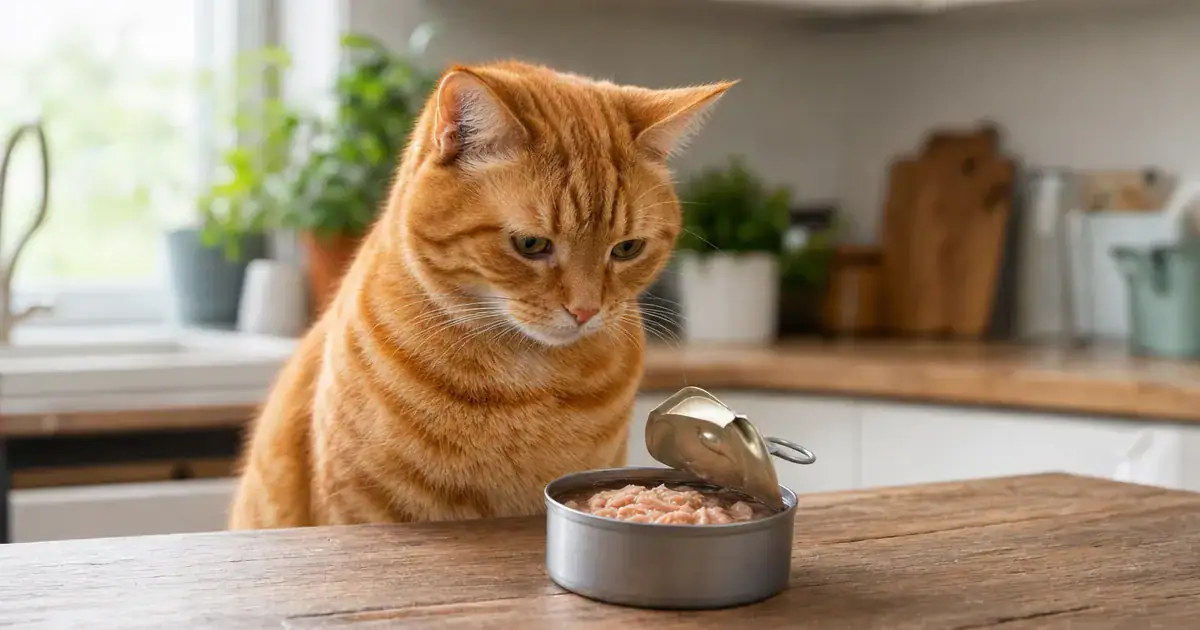
Paws Hemingway here. I have opened more tins with the power of my mind than any cat in the southern hemisphere, and I am here to answer the question you typed with one hand while fending off a headbutt: can cats eat tuna? Yes, we can. In small amounts, as an occasional treat, plain tuna is safe for most adult cats. The trouble starts when a treat turns into a lifestyle. Let me explain, one flake at a time.
So, can cats eat tuna? The short answer
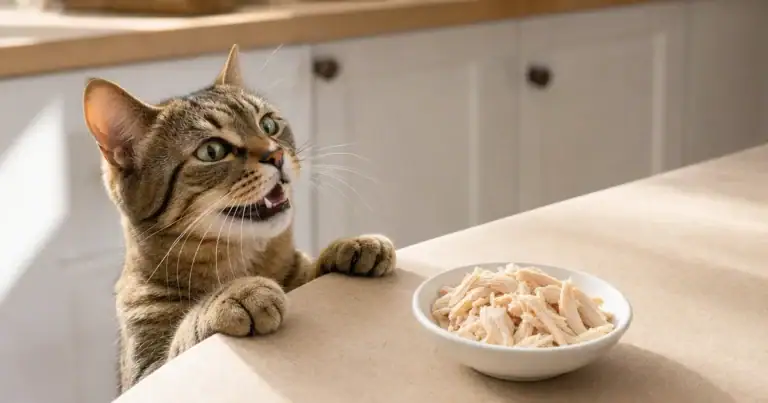
Yes. Plain, cooked or tinned tuna in springwater is safe for most healthy adult cats as an occasional treat. Vets suggest about one tablespoon, once or twice a week at most, and treats of any kind should stay under about 10 per cent of your cat’s daily food. Tuna should never replace proper cat food, because on its own it is not a complete meal. Not even for a cat as complete as me.
That is the whole answer in one paragraph. If you want to know why the limit matters, what mercury has to do with it, and why your cat now screams at the cupboard, read on.
Why cats lose their minds over tuna
Tuna is strong-smelling, rich and salty-savoury, which to a cat is roughly what a bakery smells like to you. We are obligate carnivores, built to run on meat, and fish flavours hit hard. The RSPCA Australia Knowledgebase lists tinned fish such as tuna in springwater as a fine occasional treat, and I agree with them, which is high praise from a cat.
The catch is the word occasional. Tuna is the fast food of the cat world. Delicious, but not something to build a life on.
It helps to remember what a cat actually needs. A complete cat food, wet or dry, already carries the taurine, vitamins and minerals we cannot make ourselves. A spoon of tuna adds joy, not nutrition. Think of it as dessert. You would not serve your child pavlova for every meal, however loudly they campaigned for it, and believe me, we campaign.
The safe way to serve tuna
How much, and how often?
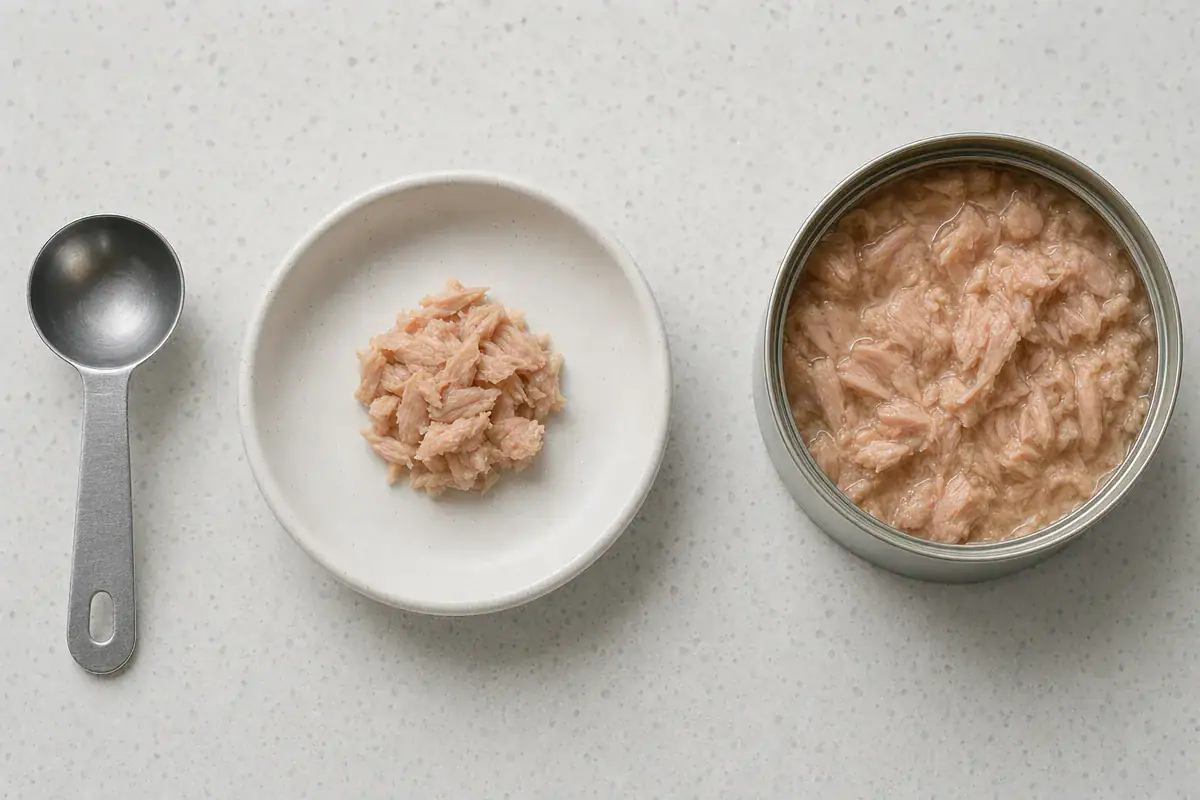
Keep it to about one tablespoon of plain tuna, once or twice a week. No seasoning, no onion, no garlic, no chilli flakes from your poke bowl. Onion and garlic are toxic to cats even in small amounts, so tuna that has been anywhere near a stir-fry stays off the menu.
If your cat is small, senior, or on a special diet, check with your vet first. And if your cat has kidney or heart issues, salty fish is a conversation for the professionals, not a blog, even one written by a cat this handsome.
Springwater, brine or oil?
Springwater wins. Every time.
- Tuna in springwater is the good stuff. Plain, low in salt, cat-approved.
- Tuna in brine is too salty for us. Skip it.
- Tuna in oil is too fatty. It can upset a cat’s stomach, and it adds calories nobody asked for, except possibly the cat.
Give it a quick drain, check for bones, and serve it like the delicacy it is. A shallow dish, please. Whiskers have standards.
What about leftovers?
A whole tin is far too much for one cat in one sitting, so you will have leftovers. Pop the rest in a sealed container in the fridge and use it within a day or two, either for yourself or for next week’s treat. Do not leave opened tuna sitting out on the bench. It goes off quickly in warm weather, and an Australian summer gives it about the lifespan of a dropped ice cream.
One more tip from a professional: make your human eat the sandwich in another room. Once a cat hears a tuna tin crack open, the negotiation begins, and we have all day. Sharing a small spoonful on treat day is easier than arguing with a cat who has already decided.
The risks nobody tells you about
Mercury builds up over time
Tuna are big fish that eat smaller fish, so mercury collects in them. A cat that eats tuna every day, especially albacore, which carries roughly three times the mercury of light tuna, can slowly build up too much. Mercury poisoning in cats is rare, but it is real. The main signs are wobbly walking and poor balance, as if we have been at your sherry. If you pick tuna, pick chunk-light or skipjack over albacore, and keep it occasional. If your cat has been on a daily tuna habit for a while, do not panic. Just switch back to a complete cat food now and mention it at your next vet visit.
Raw tuna is a no
Raw fish contains an enzyme called thiaminase that destroys thiamine, also called vitamin B1. A cat short on thiamine can develop serious neurological problems. Raw fish can also carry bacteria. So no sashimi for the cat, no matter how movingly we stare at your plate. Cooked or tinned only.
The tuna addict problem
Some cats get so keen on tuna they start refusing their normal food, holding out for the good tin like a furry little union negotiator. This matters because plain tuna is not nutritionally complete. It lacks the balance of taurine, calcium and vitamin E a cat needs, and a heavy fish diet has been linked to a painful vitamin E deficiency called steatitis. Complete cat food first. Tuna as a treat. That is the deal.
What about tuna cat food?
Tuna-flavoured cat food is a different beast from your lunch tin. Proper cat food is formulated to be complete, with the taurine and nutrients we actually need, so a tuna-flavoured complete food is fine as a regular meal. If your cat is a certified fish fanatic, that is the safer way to feed the obsession. A few tuna cat treats can also scratch the itch without unbalancing dinner.
Temptations Tempting Tuna Cat Treats, 85 g
Crunchy outside, soft inside, and small enough that a few of them stay inside the ten percent treat rule. $6.83 at VetSupply at the time of writing.
Not sure about something else in your cupboard? Run it through our Food Checker tool. It gives you a straight answer in seconds, which is more than most cats will.
When to ring the vet

Ring your vet, or a pet poison line, if your cat:
- ate tuna cooked with onion, garlic or heavy seasoning
- is walking oddly, wobbly or off balance
- is vomiting, off food or just not right after eating fish
Trust your gut. You know your cat better than anyone, even if your cat pretends otherwise in public.
The bottom line from Paws
Can cats eat tuna? Yes, and we would like it in writing. Plain tuna in springwater, about a tablespoon, once or twice a week, is a perfectly good treat for a healthy adult cat. Keep albacore off the list, never serve it raw, and do not let a treat become the whole menu.
While you are here, check whether your cheese-loving overlord is also playing with fire in our guide to can cats eat cheese, or browse the rest of the Learn hub. The Food Checker is always open, and unlike me, it never sleeps 16 hours a day.
Frequently Asked Questions
+Can cats eat canned tuna every day?
No. Daily tuna risks mercury build-up and an unbalanced diet. Keep it to about a tablespoon once or twice a week, and choose light tuna in springwater over albacore.
+Can cats eat raw tuna?
No. Raw tuna contains thiaminase, which destroys vitamin B1, and it can carry bacteria. Only offer cooked or plain tinned tuna.
+Can kittens eat tuna?
Best not. Kittens are more sensitive to mercury and to changes in their diet, so wait until your cat is at least one year old. Kittens should stick to a complete kitten food.
+Can cats eat tuna in oil or brine?
Skip both. Brine is too salty and oil is too fatty for cats. Choose tuna in springwater, drained, with no seasoning.
+Is tuna-flavoured cat food safe every day?
Yes. Complete tuna-flavoured cat food is formulated with everything a cat needs, so it is fine as a regular meal. It is human tinned tuna that must stay an occasional treat.